International Federation for Eurasier Breeding (IFEZ)
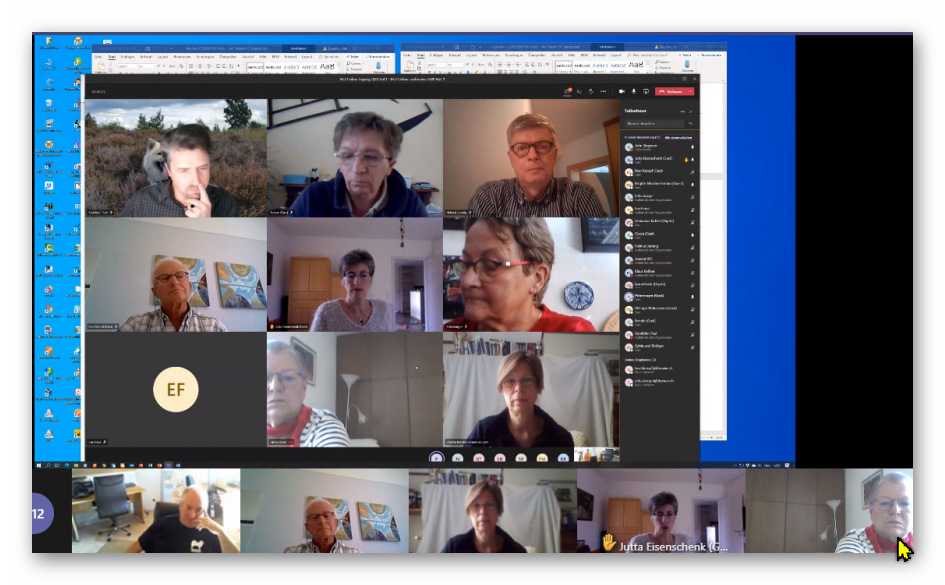
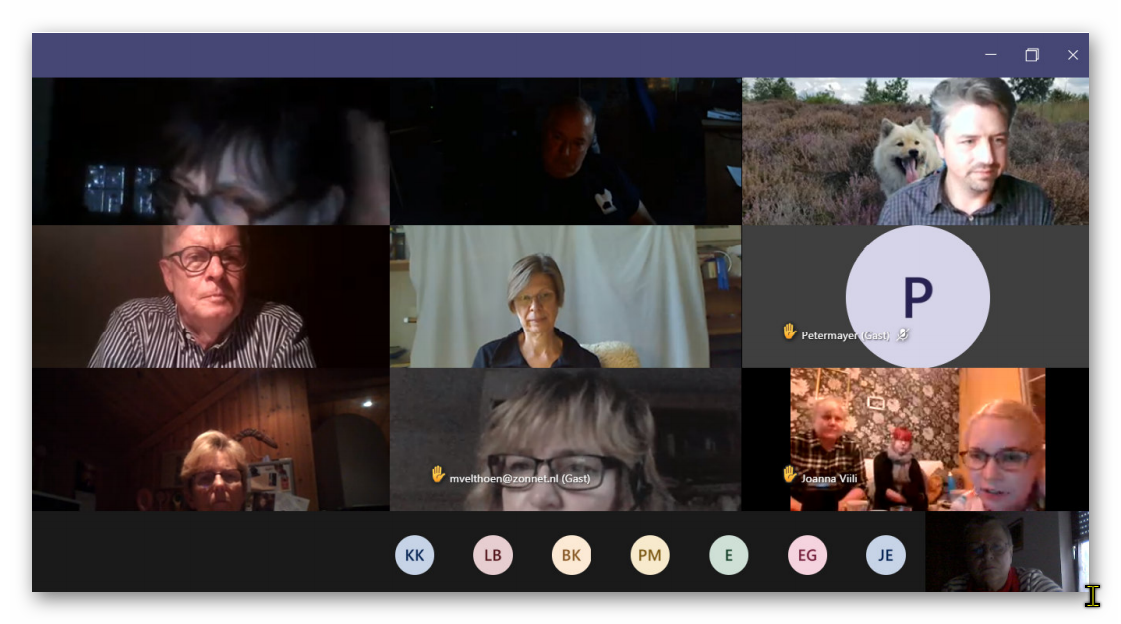
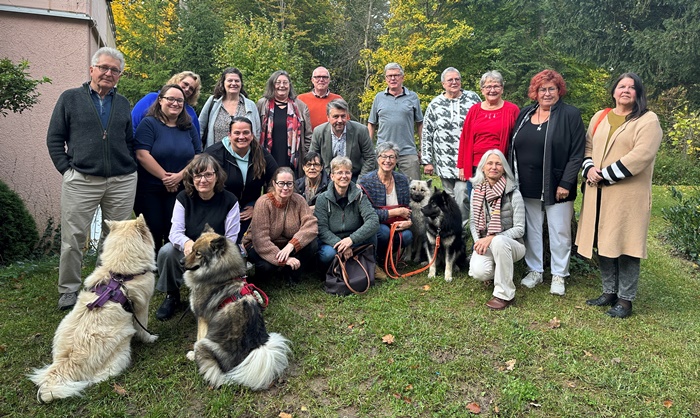
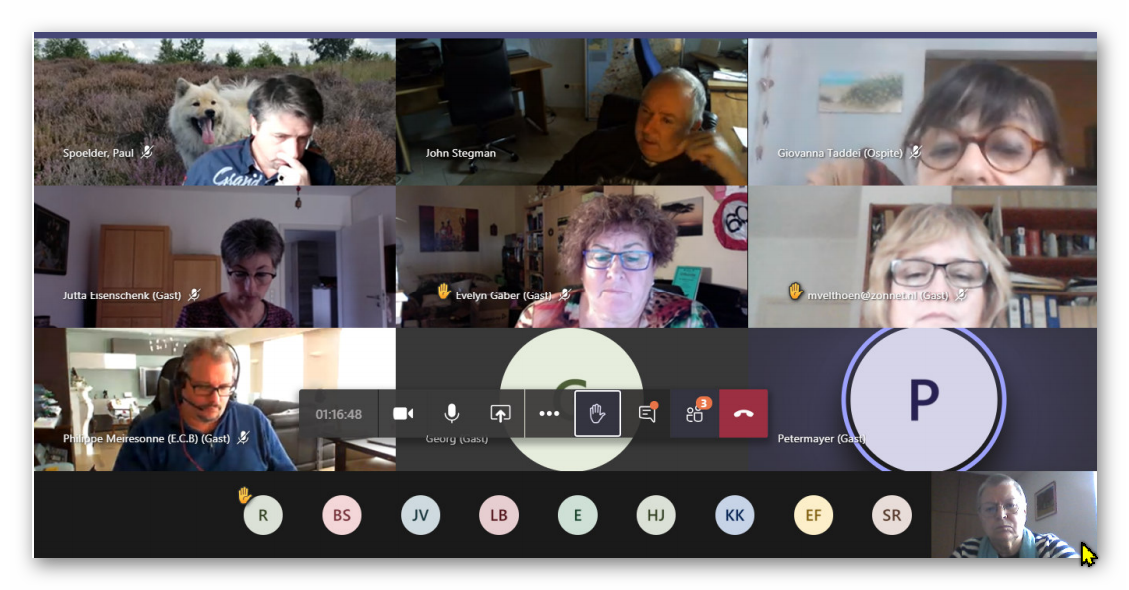
representatives of the IFEZ clubs met in Eugendorf at the invitation of the Austrian Eurasier Club (ECA) for their annual meeting, which was held in person this year.
After the welcome and review of the past year, Helmut Jamnig, President of the ECA and host, asked for a moment of silence in remembrance of Satu Rossow, co-founder of the IFEZ, who passed away in March 2025.
In order to update the IFEZ club agreement following the installation of the new database for all clubs, it was decided by majority vote that:
In the future, the IFEZ will be a "data community with regular consultations on current issues/topics related to Eurasier breeding." A draft of the agreement will be prepared by spring 2026.
The IFEZ certificate will be discontinued as of January 1, 2026. The monthly database updates and the diverse options for breeding planning, including the integration of documents and images, provide breeders with an important tool for planning healthy, typical Eurasier puppies.
The clubs then discussed their recommended puppy prices, any deposits required for health checks, waiting lists, and other relevant information. The EKW (Eurasier Club of Germany) reported on their unfortunately unsuccessful attempt at crossbreeding with a Chow Chow male.
The afternoon was dominated by information about various health problems, both major and minor, that have recently come to light or resurfaced.
Polycystic Digestive Disease (PCD) was a particular topic, as a new genetic test is now available for the variant that emerged in Switzerland. However, this test does not cover other PCD mutations. Since related dogs from the affected litter are also present in the breeding programs of other clubs, these clubs intend to test these animals, at least on a random basis. This would allow them to identify any carriers of this terrible disease.
PE, distichiasis, ED, hypothyroidism, and the different formulations used by various laboratories were also discussed. In the latter case, it is important that the evaluating laboratory is also entered into the database. The final item on the agenda, "Any Other Business," included scheduling and coordinating additional online meetings for club representatives to improve communication among them. Furthermore, Gisela Aach, the initiator and long-time secretary of IFEZ, announced her retirement after 30 years. Bettina Franz, breeding director of EFS, whom she had nominated, was unanimously elected as her successor. After a coffee break, the successful
IFEZ annual meeting concluded with an intensive exchange about the use of the new database. Many further personal conversations rounded off the conference weekend.
©GAc
translated with Google
Our breed turned 65 this year, 2025. Julius Wipfel and his wife Elfriede, who lived in Weinheim, very consciously created the "Eurasier" breed 65 years ago.
But breeding a new breed from Chow Chow and Wolfspitz wasn't that easy, as a new breed can only be created through inbreeding. Health, temperament, or color problems can quickly arise as unwanted genes can multiply. Genetic analysis didn't exist at that time. A well-developed breeding strategy can get out of hand if all breeders don't pull together. Problems arose quite early on in the EKW (Eurasier Club Weinheim), the founding club, and a new club, the ZG (Breeding Association), split off. Later, the KZG (Cynologic Breeding Association) was founded.
But our breed has overcome this early phase of setbacks, often rooted in human misunderstandings.
Keeping a breed healthy and nurturing its temperament is not something to be taken for granted. It requires considerable expertise and information about the population. Early on (1985), the ZG stored health data of its Eurasiers in a database created by Helmut Geppert and later exchanged the data with the EKW. In 1996, the IFEZ (International Federation for Eurasier Breeding) was founded. A new database with 30 health criteria and a breeding value assessment program developed by Georg Petermayer was created. In the following years, the IFEZ expanded to 11 clubs. The EFS joined the IFEZ one year after its founding. Data on over 30,000 Eurasiers were stored in the database until 2024.
The two German clubs, EKW and KZG (Cynologic Breeding Association, which is not part of the IFEZ), and formerly the ZG – Breeding Association for Eurasiers (dissolved in 2024), are the parent clubs, which, under the auspices of the VDH (German Kennel Club), are trying to strengthen the gene pool of our breed through new crossbreeding with animals from the original breeds.
A small club like the Eurasier Friends of Switzerland is too small to nurture and maintain the breed. Therefore, we are a member of the IFEZ, where, starting in 2024, we will be recording the health data of our Eurasiers together with the 10 IFEZ national clubs using "Dogbase," the new database with a breeding value assessment program. More than 30,000 Eurasier datasets have been transferred from the old "Petermayer" program to the new "Dogbase" program. In addition, almost all clubs store blood samples at the Generatio laboratory for genetic analyses when appropriate.
The IFEZ's "Dogbase" program is the central tool for maintaining the health of our breed worldwide. Approximately 60 to 80% of the Eurasier's health data is recorded and digitized in it, so that the "Dogbase" breeding evaluation program can provide reliable and reliable prognoses for matings. Beauty, as judged by a first-place show judge, counts only very little in Eurasier breeding; however, a well-founded judge's report, such as those produced at specialty breed shows, also contains valuable information for breeding.
Even after the "65 Years of Eurasier" anniversary year, time doesn't stand still. With the IFEZ's new "Dogbase" program, we are well positioned for the future. I am confident that our Eurasiers will still be what we value on their 100th anniversary: a peaceful, beautiful family dog, healthy, and long-lived.
Beat Kempf, President of the Eurasier Friends Switzerland
It is with deep sadness that we must say goodbye to Satu Rossow-Hannula, Finland.
Satu Rossow was a dedicated Eurasier breeder at the Kieristinga kennel, founder of the Finnish Eurasier Club SEK (Suomen Eurasier Kerho), and co-founder of the IFEZ, the International Federation for Eurasier Breeding.
Since the little red Dotso from Finnenhaus moved into the Rossow family's home in 1984, Satu and Hans Rossow's great passion for this breed was born. Their fascination with Eurasiers never left them, and Satu and Hans Rossow absorbed every possible knowledge about Eurasiers. Satu founded the Kieristinga Eurasier kennel with Dotso's granddaughter "Ilo," whom she adopted in 1993, where she carefully raised 11 litters.
In her native Finland, Satu introduced the Eurasier to the public and, in 1991, founded the Finnish Eurasier Club (SEK) with a few Eurasier enthusiasts, where she remained until 2021. It was a given for Satu that the Finnish club supported the International Federation for Eurasier Breeding and the idea of a common database for Eurasiers of the EKW, SEK, and ZG. Thus, since 1995, these three clubs have realized the idea of joint, data-based breeding work for the benefit of the Eurasier breed. A very special achievement of Satu's was the provision of as comprehensive information as possible to all those responsible for breeding, including about Eurasier breeding outside of our IFEZ. Thinking outside the box was always important to her.
Satu rendered outstanding services to Eurasier breeding!
Dear Satu,
You, a co-founder of the IFEZ, have now passed away. Together with your husband Hans, you came to know and love the Eurasiers and founded the Finnish Eurasier Club (SEK) in 1991. We met back then, and you were immediately enthusiastic about the idea of several Eurasier clubs working together. Even after the untimely death of your husband, you remained highly motivated and committed to doing everything you could to ensure good, healthy breeding of our Eurasiers.
You even organized an international meeting of Eurasier clubs in Helsinki in 2015 — an unforgettable experience! You often visited us on the "continent," a long journey from your Finnish homeland. But everything for our Eurasiers...
Dear Satu, even though illness has slowed down your work lately, I will miss you very much. Eurasiers near and far will miss you for your always clear opinion on careful dog breeding!
R.I.P. dear friend
Gisela Ac

IFEZ meeting in Helsinki, Satu Rossow is third from right. (c) B.R
The well-attended IFEZ conferences for almost 26 years demonstrate that the IFEZ is a great association of Eurasier clubs. The first generation of delegates (chairmen, breeding officers, and data managers), who have been with the IFEZ since its founding, are gradually stepping down from their positions in their clubs and thus as IFEZ delegates. New delegates are taking over the leadership.
The three most important pillars of the IFEZ are being modernized. They are:
The database will be hosted in a cloud, and the data will be managed directly by the club data managers. The database will be expanded to include epilepsy; such expansions are always possible depending on requirements.
The IFEZ agreement between the clubs is being revised. It will be adapted in key aspects to the current status of the IFEZ.
The IFEZ website has been completely redesigned and is now live. We believe that this window to the outside world can present the IFEZ Association and its ideas as a modern organization for the benefit of our Eurasiers.
Several topics will be addressed in the coming years to secure the future of the IFEZ, so that our Eurasiers will remain as we value them:
Healthy, with a gentle temperament, multicolored, and simply a good family dog.
Four main topics were discussed by the numerous participants from all clubs:
Experiences, Questions, and Suggestions - Access works for most, but detailed instructions are missing. A renewed data exchange from the old program to the new one would be desirable.
The problems with the new database are:
Detailed instructions are still missing - The manual in the system is only available in German; an English version would be desirable. The transition to the new program requires some effort.
Discussion about the necessity and scope of club reports. The EVN finds it a significant burden to prepare a report for the conference to inform the clubs, including personnel changes and breeding results, on the previous year.
Suggestion to report in detail on the previous year and then in a shortened version on the new year. This will be discussed further.
Discussion about collaboration with various laboratories for genetic testing and the need for a semen database for important males. Recently discovered rare diseases are presented.
A genetic test is already available for polioencephalopathy, which has so far only been identified in one litter (a connection with vaccination would also have to be investigated), and research is ongoing for PCD.
Discussion about the purpose of the IFEZ, whether it should only be a data pool, as it was when founded, or whether it should also establish minimum standards for breeding. The importance of regular exchange of breeding results and new possibilities for planning the healthiest and most stable Eurasiers should not be underestimated. This will enable better, more informed advice for breeders.
The ECA, represented by Helmut Jamnig, will assume the presidency of the IFEZ effective January 1, 2025.
© GAc 2024
Copyright © 2025 International Federation for Eurasier Breeding. All Rights Reserved. | Website created by www.kiiwi.ch